Certified Nursing Assistant

Your Future Starts Now
Become a Certified Nursing Assistant (CNA)
- 4 – 7-week course
- Flexible Hybrid Online Learning
- In-person Lab Skills
- Clinical Training in a Skilled Nursing Facility
- Job Placement Assistance
- Available at Quincy and Plymouth campus
Your pathway to a CNA career: The Certified Nursing Assistant Program at Quincy College qualifies you for the state’s competency exam. Certified Nursing Assistants provide basic care for patients in hospitals and residents of long-term care facilities, such as nursing homes.
Program Requirements
- Must be at least 18 years of age
- High School Diploma, GED or equivalent
- Recent physical exam that does not show any physical restrictions
- Negative TB or chest x-ray
- CORI check
- Immunization record (MMR, Varicella, Hepatitis B, Flu Shot, Tdap, Covid)
- Commitment to participating in the full program
- Excellent attendance and participation
- Completion of 120 hours of online classwork and on-campus labs
- Completion of 24 hours of clinical
Questions?
Nicole Morrissey, Deans Assistant of QC Boston
[email protected] | (617) 984 – 1799
Certified Nursing Assistant Courses
-
Code
Course
Credits
-
- CNA 100
Certified Nursing Assistant
Upcoming CNA Classes
Spring 2026 – Quincy Campus
Daytime Classes: Online Theory | Labs on-campus | Fridays from 8 a.m.—4:30 p.m. | Clinical 24 hours during the last 1–2 weeks
Option 1: January 9, 2026 – February 20, 2026
Option 2: March 13, 2026 – May 1, 2026
Evening Classes: Online Theory | Labs on-campus | Tuesdays & Thursdays from 4 p.m.–10 p.m. | Clinical 24 hours during the last 1–2 weeks
Option 1: January 6, 2026 – February 12, 2026
Option 2: February 24, 2026 – April 2, 2026
Option 3: April 14, 2026 – May 21, 2026
Weekend Classes: Online Theory | Labs on-campus | Saturdays from 7 a.m.–7 p.m. | Clinical 24 hours during the last 1–2 weeks
Option 1: January 17, 2026 – February 21, 2026
Option 2: March 7, 2026 – April 18, 2026
Spring 2026 – Plymouth Campus
Daytime Classes: Online Theory | Labs on-campus | Thursdays from 8 a.m.—4:30 p.m. | Clinical 24 hours during the last 1–2 weeks
Option 1: January 22, 2026 – March 5, 2026
Evening Classes: Online Theory | Labs on-campus | Mondays & Wednesdays from 4 p.m.–10 p.m. | Clinical 24 hours during the last 1–2 weeks
Option 1: March 23, 2026 – May 25, 2026
Summer 2026 – Quincy Campus
Daytime Classes: Online Theory | Labs on-campus | Fridays from 8 a.m.—4:30 p.m. | Clinical 24 hours during the last 1–2 weeks
Option 1: May 15, 2026 – June 6, 2026
Option 2: July 10, 2026 – August 21, 2026
Evening Classes: Online Theory | Labs on-campus | Tuesdays & Thursdays from 4 p.m.–10 p.m. | Clinical 24 hours during the last 1–2 weeks
Option 1: June 2, 2026 – July 9, 2026
Option 2: July 14, 2026 – August 21, 2026
Weekend Classes: Online Theory | Labs on-campus | Saturdays from 7 a.m.–7 p.m. | Clinical 24 hours during the last 1–2 weeks
Option 1: May 2, 2026 – June 13, 2026
Option 2: June 27, 2026 – August 8, 2026
Summer 2026 – Plymouth Campus
Daytime Classes: Online Theory | Labs on-campus | Thursdays from 8 a.m.—4:30 p.m. | Clinical 24 hours during the last 1–2 weeks
Option 1: May 21, 2026 – July 2, 2026
Option 2: July 16, 2026 – August 27, 2026
Frequently Asked Questions
1. How long is the Hybrid CNA Program?
- Daytime session: 6-7 weeks
- Evening session: 5 weeks
- Weekend session: 6 weeks
2. Do I have to come in for classes?
- Class/theory is online asynchronous (via Cinematic App), and the weekly assignments can be done at your convenience.
- Skills Lab is onsite for 12 hours a week. Day cohorts will have 8.5 hours and Evening cohorts will have two 6-hour lab sessions per week for the first four weeks. Weekend groups will have one twelve-hour lab on Saturdays for the first four weeks.
- Clinical will take place off-site at a long-term care facility where students must complete 24 hours of clinical care. Daytime and evening session students will have three 8-hour clinical rotations, while weekend session students will have two 12-hour clinical rotations.
3. How much does the hybrid CNA program cost?
Tuition for the CNA program is $1,550, plus the cost of uniform (navy-blue scrubs).
4. Is there a payment plan available?
Yes, tuition can be paid in two installments: one before the course begins and one before the start of clinical sessions.
5. What are the eligibility requirements of the CNA program?
- Students must be at least 18 years of age
- Have a high school diploma, GED, or equivalent
- Be able to understand and communicate comfortably in English
6. Do I have to purchase my uniform at Quincy College?
We encourage students to purchase Quincy College navy blue scrubs available at the College’s Bookstore. Navy blue is required for clinical. Students are free to wear any color healthcare uniform/scrubs for skills lab.
7. Is financial aid available?
No, financial aid is not available for non-credit courses.
8. Are grant funds available?
Yes, MassHire offers financial support for eligible individuals seeking full-time employment. In order to receive grant funding, students must complete the CNA program in its entirety, obtain relevant industry certification, and agree to find training-related employment. MassHire will also provide job placement assistance to program participants. Those seeking grant funding must meet the following criteria:
- Massachusetts resident
- Unemployed or under-employed
- Pass a CORI/SORI
- Register with the MassHire Career Center
- Agree to seek employment as a CNA or HHA after successfully completing course
To find your nearest MassHire Career Center, visit www.mass.gov/how-to/find-a-masshire-career-center.
9. Are there CNA testing fees?
Yes, there is a $110 testing fee per student (Knowledge test- $40, Skills test- $70).
10. Where can I work as a CNA?
CNAs can work in various locations and environments, including nursing homes, hospitals, assisted living and/or retirement communities, home care agencies, adult day care centers, schools, clinics, and private practices.
11. Does Quincy College help with job placement?
Yes, you can receive job placement assistance at the Student Career Center.
12. Will being a CNA help me get into a nursing program?
Yes, becoming a CNA helps tremendously when it comes applying to nursing school—you’ll already be ahead of the curve in terms of skills and experience. However, it’s important to remember that working as a CNA does not guarantee admission into a nursing program.
Questions?
Nicole Morrissey, Deans Assistant of QC Boston
[email protected] | (617) 984 – 1799

You might also be interested in...
-
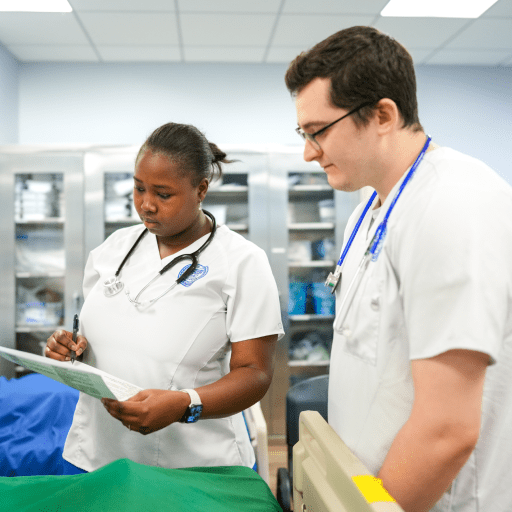
Nursing (RN)
Quincy College’s Associate in Science Degree in Nursing program is a blended, Nurse of the Future competencies and concept-based curriculum.
-

Nursing (LPN)
Become an LPN in 10 months with Quincy College’s accredited Practical Nursing (LPN) program, which offers clinical experience and comprehensive LPN ed
-

Community Health Worker
Students will be introduced to community health concepts, resources, and skills needed for a Community Health Worker.
-

Pharmacy Technician
The Quincy College Pharmacy Technician program prepares students for employment in the pharmacy technician field.